The Pre-Pyrenees Mountains

The Pre-Pyrenees Mountains

The Pre-Pyrenees are the ranges of 1,500 to 2,000m that rise south of the main Pyrenees chain, between Huesca and Lleida. This is one of the driest corners of Spain, which makes it the place to ride in spring and late autumn, when the high mountains are under snow and much of Europe is cold and wet.

The riding is mostly rock: ancient trails between abandoned villages, huge slabs, ledges and the famous grey-earth ridges. Within a couple of hours’ drive of each other you have three very different areas: Ainsa (Zona Zero), Tremp and the Sierra de Guara.
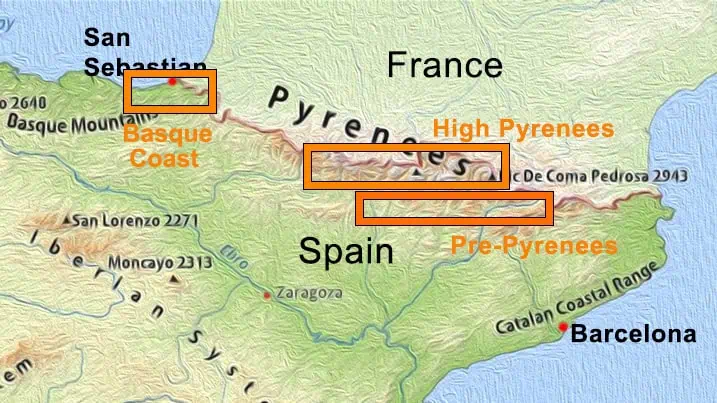

Map of the Pyrenees showing the Pre-Pyrenees mountain biking areas

The Pre-Pyrenees are a hidden gem for mountain biking, offering a unique combination of rugged terrain, scenic views, and incredible trails. This area delivers a perfect balance of technical challenges and awe-inspiring landscapes.

Which area suits you? If you love flow and speed, Tremp. If you prefer raw, rocky, natural trails, Ainsa. If you want big, wild days with hardly another rider in sight, Guara. Most riders who try them can’t pick a favourite, which is why our trips combine them.

Have A Look At Some Photos From The Pre-Pyrenees Mountains →

Seasons ⇨

What are the best seasons for biking in the Pre-Pyrenees?

The Pre-Pyrenees mountains are best in spring and autumn; in summer they’re just too hot. We think the best months are March, April, May and November. It’s possible to ride over winter too, but the days are shorter, which limits how much riding we can do.

Weather ⇨

In spring, overnight temperatures can fall below zero, but they quickly climb into double figures once the sun comes up. We often start with a jacket and finish in short sleeves. These are very dry areas, which only get rain with southerly weather systems, and those aren’t typical.

In autumn the story is much the same: cold overnight but warm in the day. The days are a little shorter but the temperatures a little warmer.

June is borderline, and in July and August it can be very, very hot, so riding is not pleasant.

Travel ⇨

Barcelona: Train or Airport

You can arrive in Barcelona by plane, or by train from many places in Europe. Guests tell us the train is really easy and there are no issues at all with bikes in bags. We pick up from Barcelona for our Pyrenees Odyssey, Ainsa Enduro, Backcountry Pyrenees and Tremp vs Ainsa holidays.

Getting to Tremp or Ainsa from Barcelona by public transport is really difficult. You’re best hiring a car; a taxi costs about €600 each way. If you fancy an adventure you can take the bus, but it takes a full day: you need to go to Barbastro and change to a local bus company from there.

Driving: Ferry or Direct

Driving is easy from anywhere in Europe, and from the UK or Ireland there are ferries to the Basque Coast. For all of our trips we meet at a central location, so you can leave your bike bags there and we arrive back at your car at the end of the trip. It’s best to get in touch to talk through the options.

Other Airports

Toulouse, Zaragoza and Madrid have flights from many places. If these are your only options, we can arrange a transfer at an extra cost.

Where to Stay ⇨

Ainsa is the easy base: a beautiful medieval old town with bike shops, bike-friendly hotels, and plenty of bars and restaurants.

Tremp is a working town rather than a tourist one, with fewer visitors and good, locally owned hotels in the centre.

Guara has small guesthouses in tiny villages. Book well ahead, and don’t expect many places to eat.

Biking Hotspots ⇨

Ainsa (Zona Zero) is the best-known area, with a big signed network of rocky, natural trails on ancient paths between villages, and the famous grey-earth ridges. It has hosted the Enduro World Series and is the easiest base in the Pre-Pyrenees, with bike shops, shuttles and plenty of places to eat. Its reputation has grown over roughly the same years as basqueMTB!

Tremp is a couple of valleys east, in Catalonia, and completely different: hand-built flow over vast slabs of rock, with long shuttle descents. It’s quieter than Ainsa and getting better known every year, with good reason.

Guara is our favourite. It’s one of the emptiest corners of Europe, with long, wild, rocky descents and hardly another rider in sight. It has very few services, so it’s best ridden with someone who knows it.

Video Links ⇨
FAQ ⇨

Ainsa or Tremp: which is better?

Different, not better. Ainsa is rocky and natural; Tremp is hand-built flow over rock slabs. If you can, ride both. We have been asking our guests for their opinions over the years and so far it is 50:50 between Ainsa and Tremp.

What level do I need?

A confident intermediate rider who is happy on rocky, technical trails. Some descents are long and demanding. Guara is the most technical area.

Can I ride an e-bike?

Yes, e-bikes are great here since some of the best trails need a climb.

What bike should I bring?

A trail or enduro bike with at least 140mm of travel, good tyres and fresh brake pads. The rock is hard on both.